.svg)
Model revenue your way, without spreadsheets or consultants.
Flexible, driver-based modeling that bends to how your business makes money and stays easy enough to run yourself. Build and update your revenue model with plain-English formulas and AI.


















Spreadsheets can't keep up, and most planning
tools can't model revenue the way you do
Drivetrain: flexible enough for any revenue model, yet simple enough to run yourself
Model revenue exactly how your
business works.
With a driver-based engine, model any revenue, subscription, usage, transactional, or project-based, from an ARR waterfall, PxQ, sales capacity, cohort, or anything else.
Model at any level of detail: by region, segment, AE, product line, or SKU, even an individual customer. Use AI to build, edit, and understand your models.

Build complex models without
the fragility.
Make your model as detailed as you need, and it won't slow down or break. No more waiting overnight just to insert a new row, or broken formulas when you change an assumption.
If you need to make edits, ask AI instead of rebuilding from scratch.

Bring in data from your systems
and team.
With 800+ connectors, actuals from CRM, billing, and other sources flow in on their own, so you're not updating numbers by hand every time you re-forecast.
Sales and revenue leaders can directly provide their inputs on pipeline and other assumptions through access-controlled views.

Run what-ifs in minutes.
Build a scenario from a simple prompt, like "what happens if we raise prices by 15%?", and watch it flow straight through to your P&L and cash flow.
Or set a target, like "how can I double revenue without increasing marketing spend?", and let AI find the best path to it.

.png)
.png)
“The Drivetrain team co-built our models with us to perfectly translate our former Excel logic into Drivetrain. The platform itself is powerful and intuitive, offering great automation, clear visibility, and a strong connection with Salesforce and other systems.”
.png)
.svg)
“Drivetrain has completely leveled up our reporting. We are no longer sending out reports and tables in GSheets, but have a more polished look which is super easy to change to suit the audience's needs. And we have trust in the data.”
.png)

“I have used several FP&A platforms and Drivetrain is the best I've used because we can model at a very granular level without much effort. This is the first platform I've used where I've felt comfortable getting rid of the "backup" Excel model.”
See how revenue planning works on Drivetrain
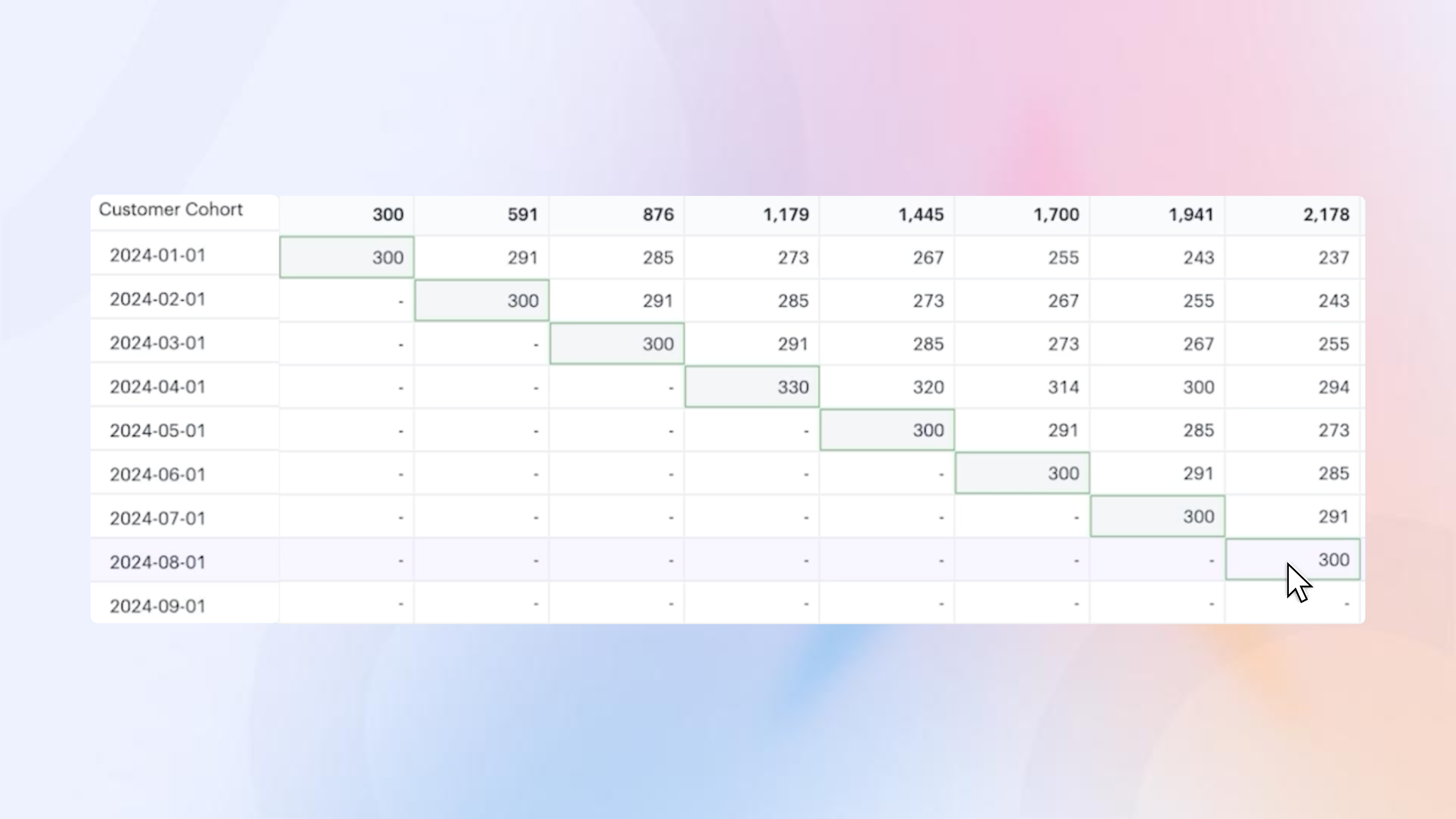
Cohort modeling: Spot retention and growth trends instantly
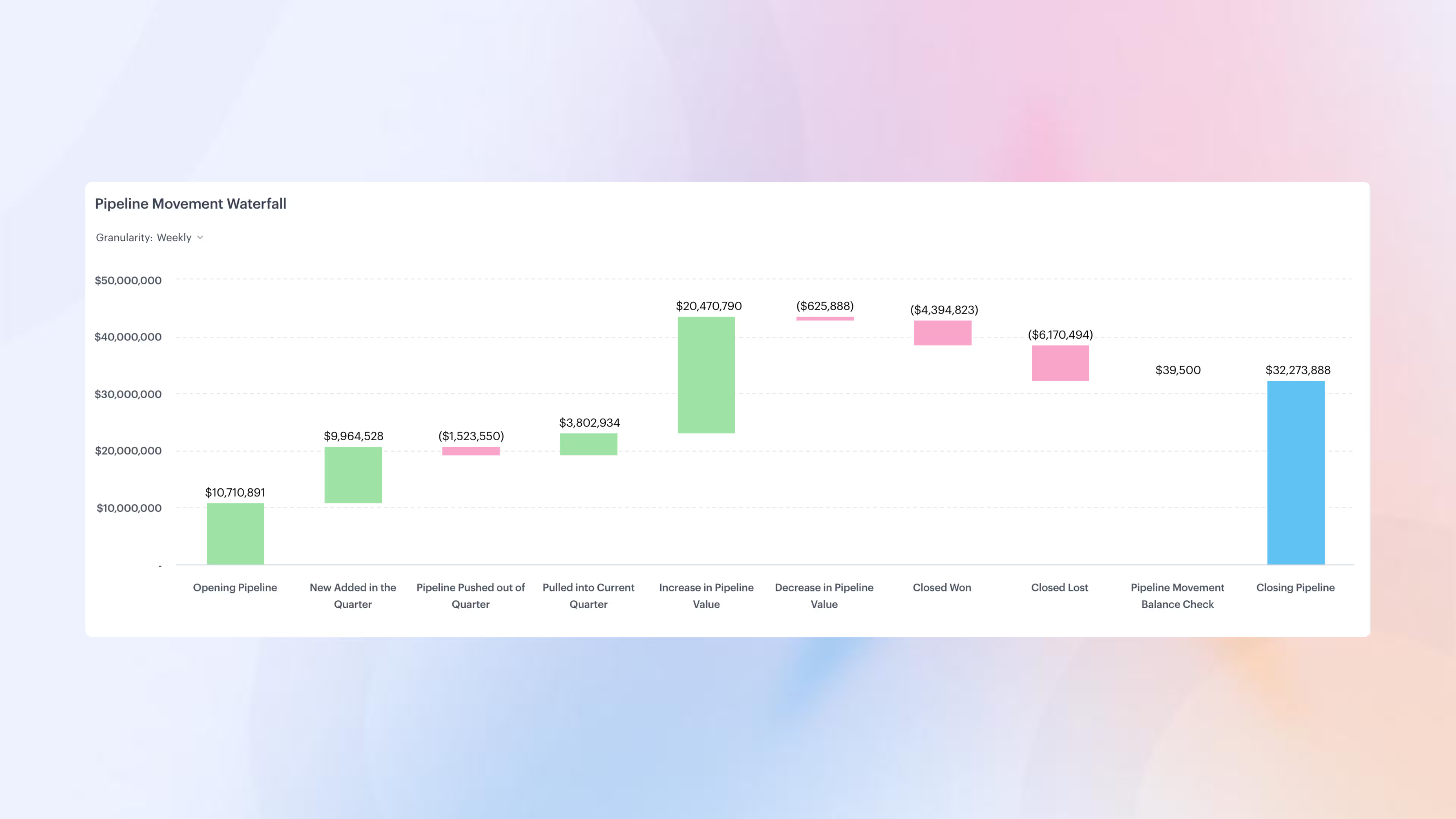
Pipeline movement: Track deal progress in minutes
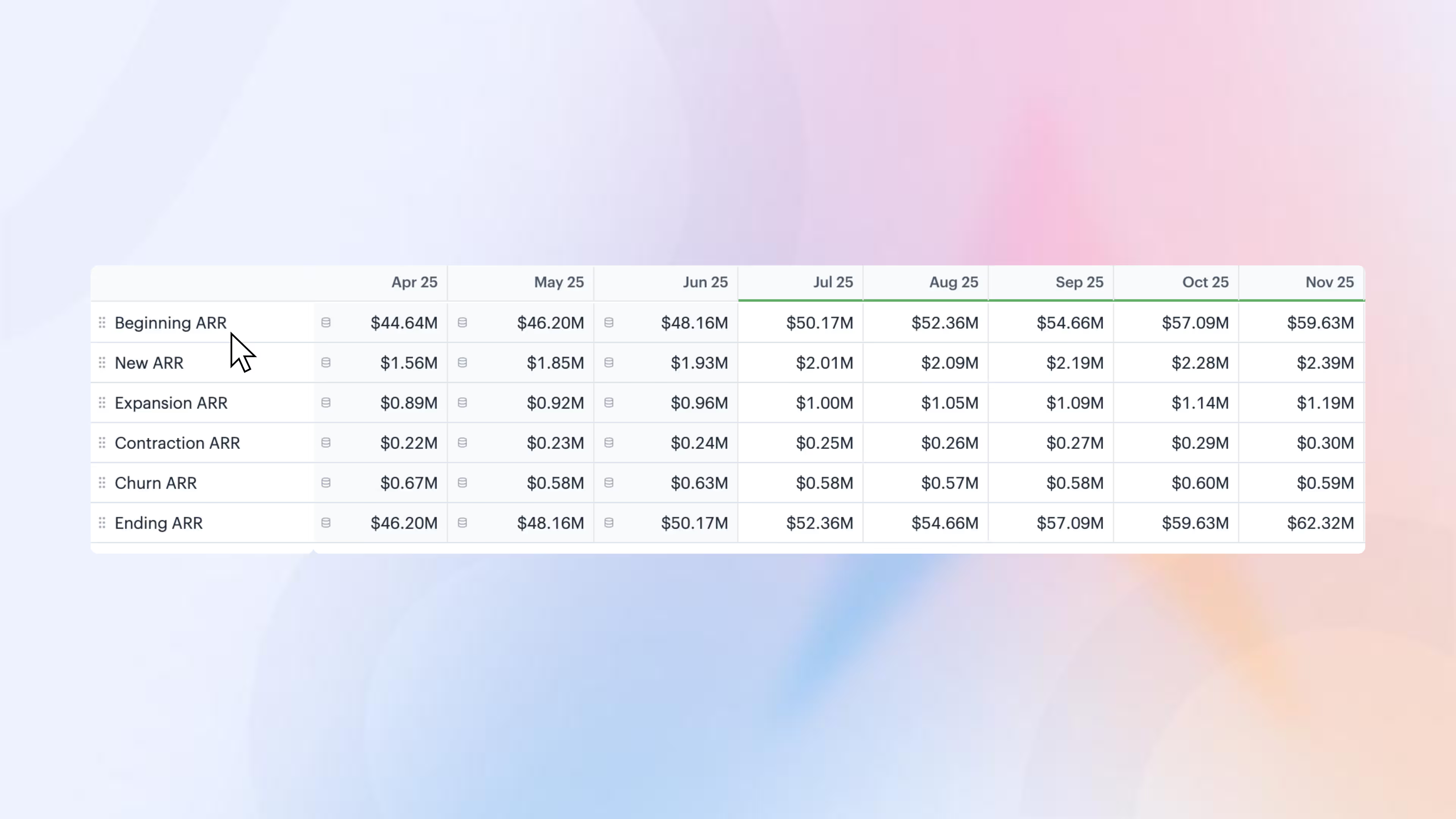
ARR waterfall: Break down revenue drivers in minutes
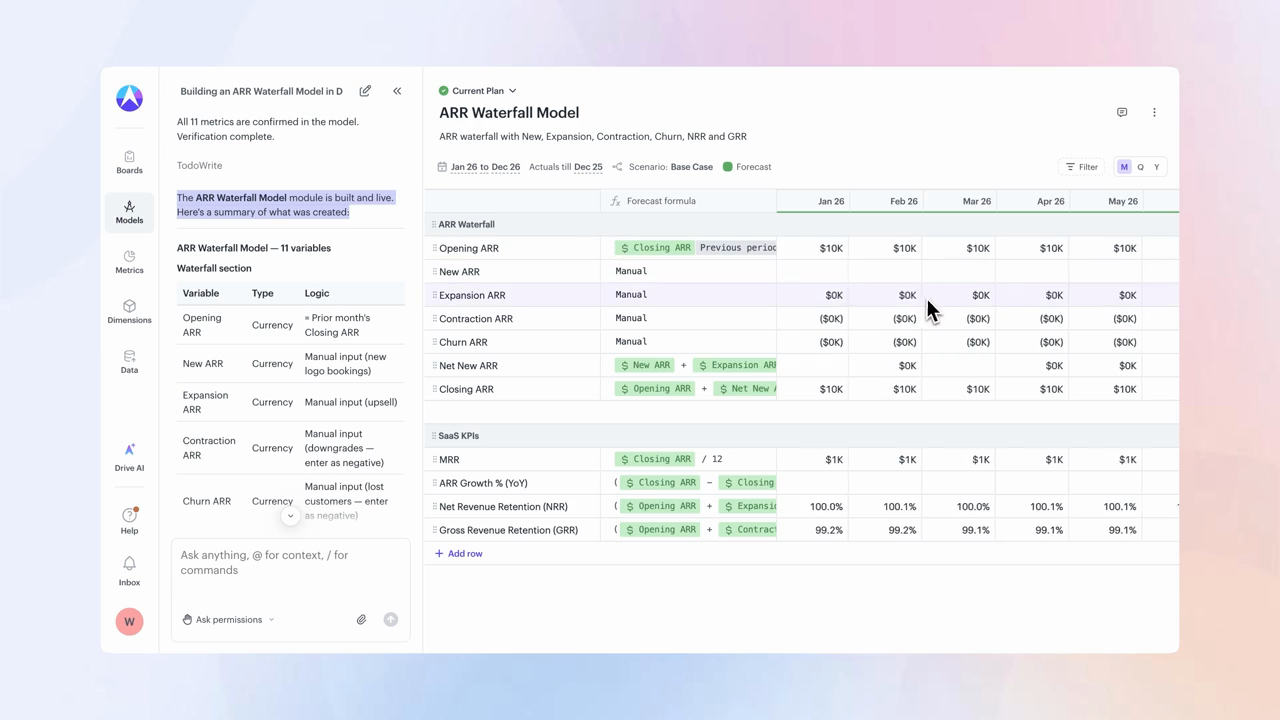
Build financial models through conversation
.png)
Explore scenarios with AI-powered planning
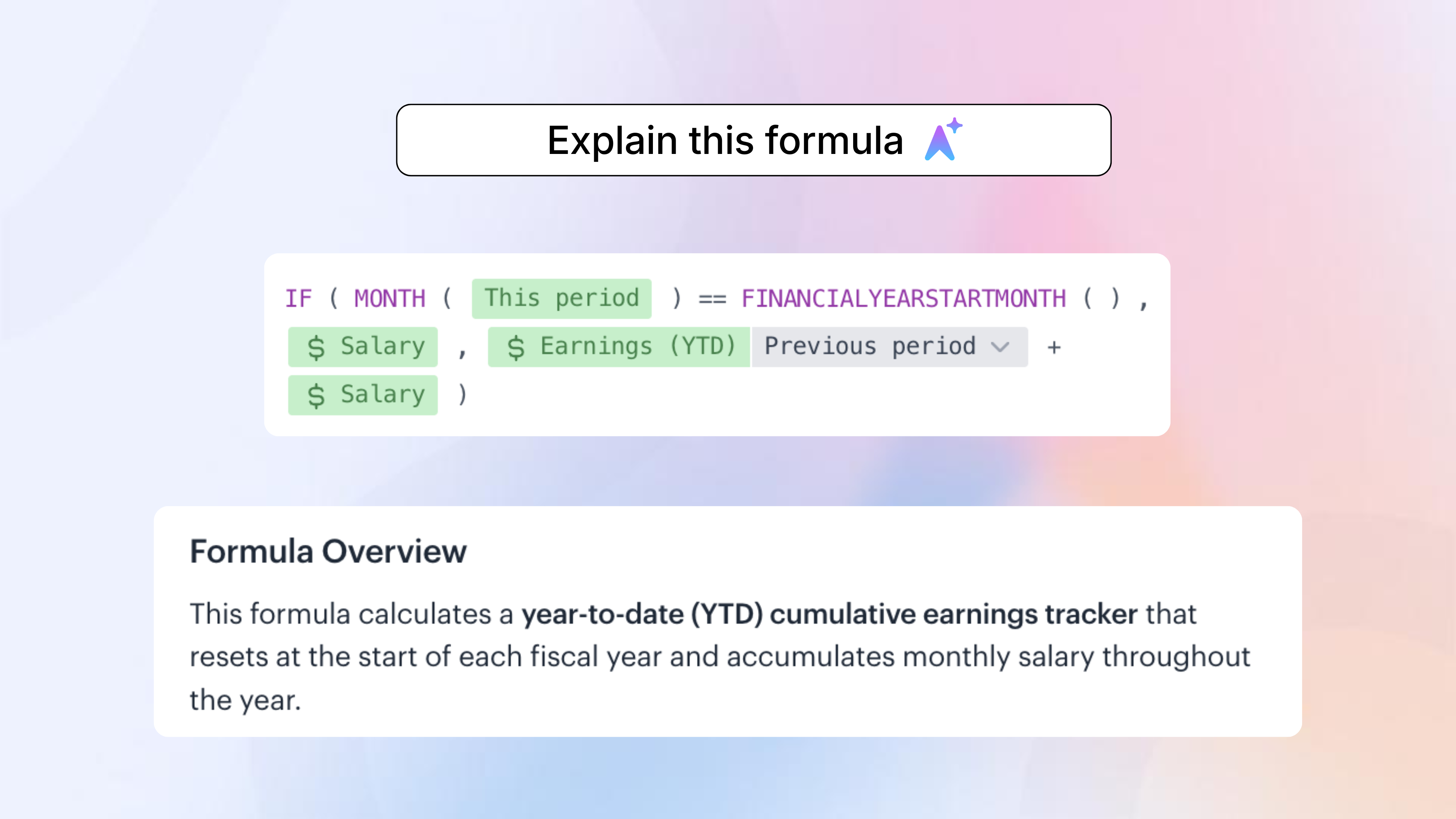
Formula Agent: Explain, write, and debug formulas in plain English
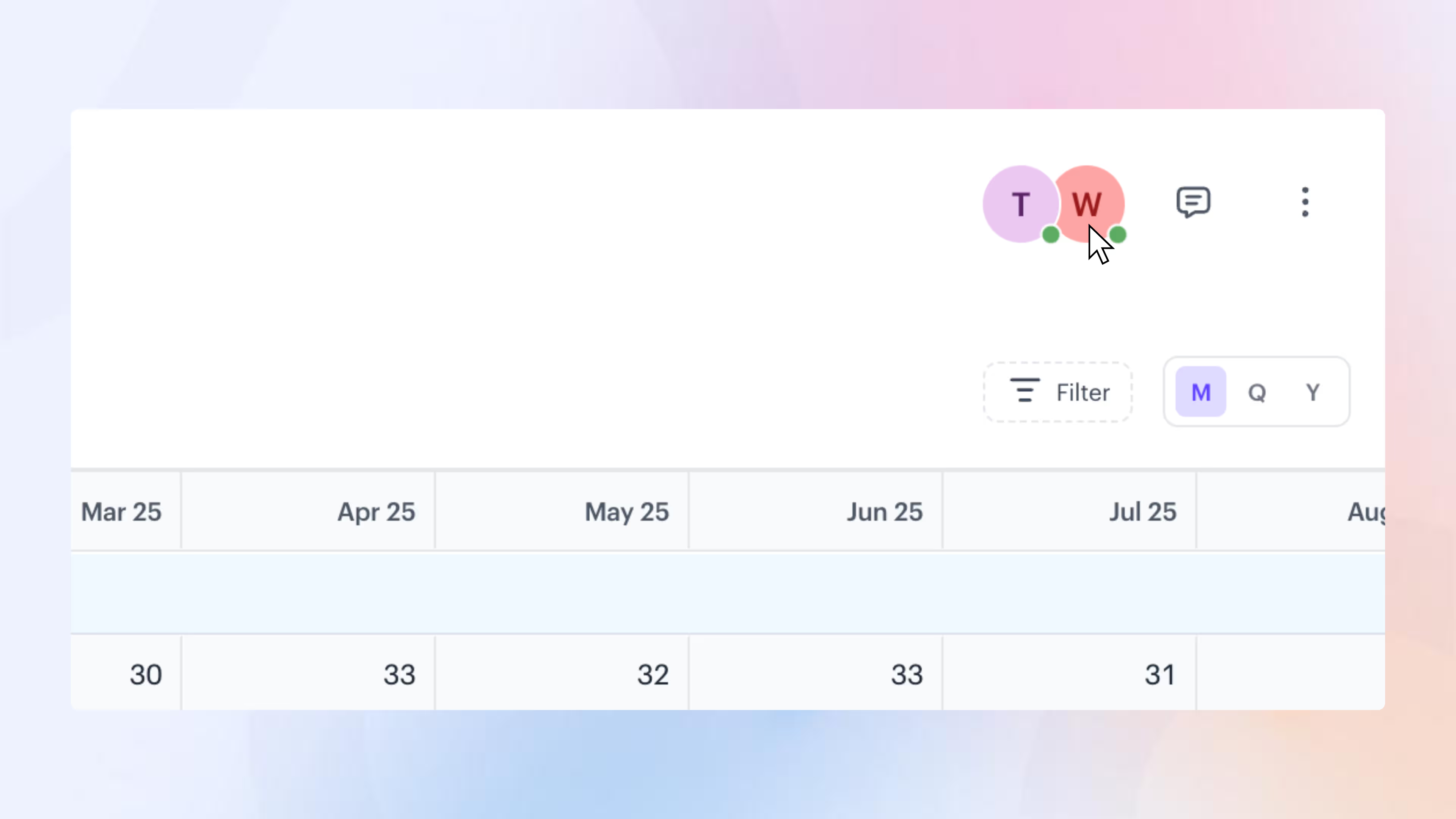
Collaborative planning: Edit models as a team
.avif)
Budget vs Actuals: Spot variances with real-time comparisons
Modern finance teams use Drivetrain to do more
.png)
.png)
.png)
Can I model revenue by product, segment, country, region, even down to a single customer?
Drivetrain's flexible multi-dimensional modeling allows you to forecast revenue by product, segment, region, country, rep, or individual customer. Drivetrain supports an unlimited number of dimensions, so you can plan at the granularity you want.
Can I build a bottom-up pipeline forecast and a top-down target, and reconcile the two?
Build a bottom-up forecast from your pipeline and a top-down model from your target, then compare them side by side to see and close the gap.
Can I bring in my existing Excel model, or do I have to rebuild it from scratch?
In Drivetrain, you don't start from a blank page. Import your existing model and connect your data sources, and AI helps recreate your logic in Drivetrain.
Can I flip a driver like attainment and see the impact on bookings and EBITDA, without rebuilding anything?
In Drivetrain, your models are interconnected. A revenue model built on quota attainment carries bookings and feeds your P&L, so when you change the attainment driver, it flows straight through, and you see the impact on bookings and EBITDA. Nothing to rebuild; the change happens automatically. Or just ask Drive AI, "what happens to bookings and EBITDA if my attainment drops to 65%?" and it answers instantly.
We run multiple entities. Can I use one revenue model for some companies and a different one for others?
Model each entity the way it actually earns revenue, using a different model where it makes sense, and consolidate them into one group-level view.
How long until we're live, and will I need a consultant to set it up or to change it later?
Most teams are live in four to six weeks. And because formulas are written in Excel-like syntax you already know, with AI to help build and edit models, your team can build and change the model themselves. No consultants needed to set it up or change it later.
Still planning revenue in
spreadsheets?
Fewer manual updates, a forecast you can trust,
and what-ifs in minutes.