.svg)
.svg)

- Year-end close is the process of finalizing, reviewing, and reporting a company’s financial records for the fiscal year.
- The biggest surprises often hide in reconciliations, assumptions, and undocumented decisions.
- Repeatable processes, strong controls, and the right technology create an audit-ready close that supports fundraising and growth.
.svg)
.svg)

.svg)

Early in my finance career, I watched a company lose its controller and several senior finance employees just weeks before year-end, right as a new CFO was stepping in. The timing was difficult, and everyone treated it like a staffing problem: Backfill the roles and redistribute the work.
But the roles weren't the real loss. The accounting knowledge had left with the people, and no job posting was going to bring it back.
The team could see what had been recorded but not always explain why. Assumptions lived in spreadsheets, email threads, and people’s memories. At year-end close, routine questions took hours to answer: Who approved this treatment? Which data supported the calculation? Did we use the same approach before?
Each question created more work and more uncertainty. The new CFO had inherited the numbers but not the reasoning behind them.
The real risk, in every version of this I've seen, is a year-end close that runs on individual memory instead of a repeatable process. A process is only trustworthy when it's documented, when anyone can see who owns each task, where the supporting evidence lives, and how each decision was made.
That close left me with a simple test for year-end readiness: Another qualified person should be able to complete the close accurately and on schedule. And that person should be able to defend every material number, even if a key employee leaves, the business adds another entity, or an auditor requests more evidence.
Achieving that standard requires work throughout the year. Readiness develops through a disciplined record-to-report cycle, the end-to-end process of recording transactions, closing the books, and producing financial reports, along with consistent documentation and clear accountability. With those foundations in place, the finance team can handle change and increased scrutiny without losing control of the close.
Why year-end close demands greater discipline than month-end close
During a typical month-end financial close process, most decisions stay within accounting and financial planning and analysis (FP&A). The team reconciles accounts, reviews variances, posts adjustments and prepares management reports. Other departments might provide data, but their involvement is often limited.
Year-end close is different. It requires greater discipline because more stakeholders review the results and every material judgment must be documented, traceable, and defensible. Discipline, in this context, means applying consistent controls, retaining clear evidence, and making sure each decision can withstand independent review.
At year-end, the record-to-report cycle comes under broader scrutiny. Tax, legal, HR, treasury, and department leaders may all need to provide information or review key assumptions. Internal and external auditors test the numbers and supporting controls. The audit committee and board commonly review the final results.
This wider audience raises the standard for every material decision. It’s not enough for a number to look reasonable or match the approach used last year. I need to be able to explain:
- Where the underlying data came from
- Which assumptions informed the calculation
- Why the accounting treatment is appropriate
- Who reviewed and approved the decision
- Whether new facts or standards require a different approach
Revenue recognition shows why last year's treatment isn't a safe default. A new contract structure could change when the company can recognize revenue, even if a similar transaction received a different treatment in the past. The same risk applies to expense cutoffs, tax positions, legal claims, bonuses, commissions, and other provisions.
The key difference between month-end and year-end close is the purpose and level of review. Both help the business track performance, while the year-end close process must also withstand formal review. Every significant number, judgment, and adjustment should have clear, defensible support.
How to manage the year-end close: 4 phases of work
Because year-end involves more judgment, scrutiny, and coordination than month-end, I organize the work into four phases:
1. Prepare
2. Reconcile, adjust and consolidate
3. Report and disclose
4. Review and sign off
This framework follows the same basic sequence as the financial close and consolidation process, with additional steps for annual reporting, audit readiness, and formal approvals.
Phase 1: Prepare before the close
Begin at least 2-3 months before year-end. First, work backwards from the reporting and audit deadlines to create a close calendar with clear owners, reviewers, due dates, and dependencies.
Then collect inputs from every relevant team:
- The tax team prepares the provision and flags changes in uncertain positions.
- Legal identifies claims, contract changes, and contingencies.
- HR supplies payroll, bonus, commission, and benefits data.
- Treasury confirms cash, debt, interest, and foreign exchange activity.
- Sales and operations provide information affecting revenue and expenses.
- Auditors identify documentation needs and areas of focus.
Next, I review new or complex transactions, such as acquisitions, financing rounds, debt changes, restructurings, and new contract terms. I also reassess accounting treatments carried over from prior years.
I update the relevant accounting policies, define transaction cutoff procedures, and consult auditors early when a treatment involves significant judgment.
I pay particular attention to recurring journal entries, revenue recognition, leases, tax positions, equity awards, provisions, and intercompany arrangements, such as loans, management fees, cost-sharing agreements, and transfer-pricing policies. For each material treatment, I ask a simple question: If I were reviewing this transaction for the first time today, would I reach the same conclusion?
Finally, complete overdue reconciliations, resolve old exceptions, and collect missing supporting documentation. Following these best practices for month-end financial close helps the team begin the year-end close with fewer outstanding issues.
Phase 2: Reconcile, adjust, and consolidate
After the fiscal year ends, confirm that the general ledger is complete, accurate, and supported. This phase of the year-end financial close process validates the final reporting-period activity before the books are locked.
If the company performs a soft close (a preliminary close completed before the final year-end close), use it to process current-period activity and identify missing entries, unusual balances, and unresolved differences. Phase 1 clears earlier backlogs and prepares the team; the soft close tests whether the current year-end numbers are ready to finalize.
Reconcile material balances, including cash, receivables, payables, payroll, fixed assets, debt, equity, and deferred revenue, with bank statements, subledgers, and other independent records. I investigate old reconciling items, duplicate entries, and unexplained movements rather than simply confirming that totals match.
Also test revenue and expense cutoffs and calculate necessary adjustments, such as:
- Bonuses, commissions, and unused leave
- Unbilled vendor costs
- Taxes, interest, and legal provisions
- Credit losses, returns, and refunds
- Depreciation, amortization, and impairments
- Inventory and foreign exchange adjustments
Every material estimate needs its source data, assumptions, calculations, and review evidence documented.
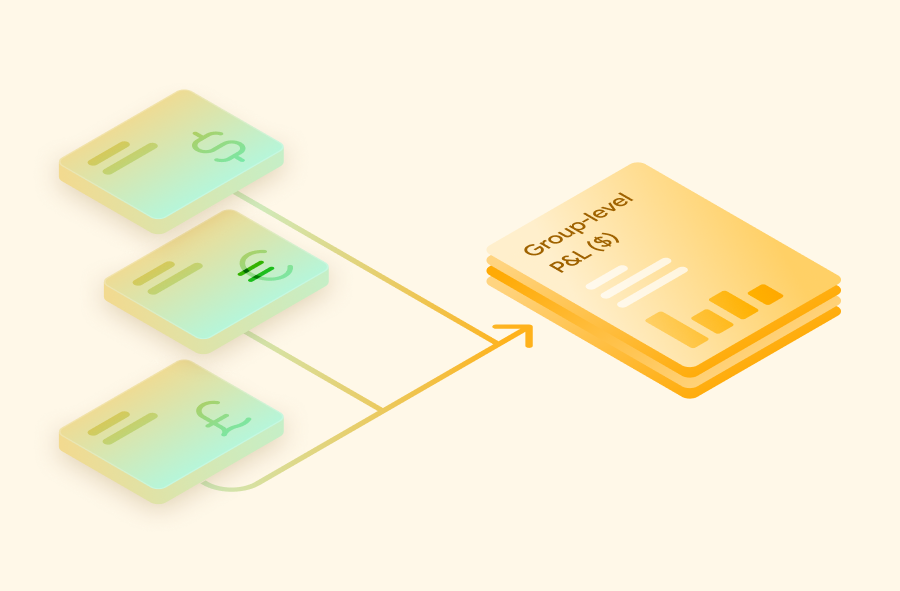
In multi-entity companies, reconcile intercompany balances, record transfer-pricing entries, translate foreign operations, and eliminate intercompany activity before consolidation. For businesses operating across currencies, this guide to multi-currency consolidation explains the additional considerations. You should also verify that account mappings remain consistent across entities and systems.
Automation can reduce manual reconciliation work, such as using Copilot for FP&A. Financial close software or close management software can also automate recurring tasks and give the team better visibility into progress. However, I still review exceptions, verify the output, and retain evidence of review before approving the results.
Phase 3: Report and disclose
Once the books are reconciled and adjusted, prepare the consolidated income statement, balance sheet, and cash flow statement. Compare the results with the budget, forecast, and prior periods, then investigate unusual movements and relationships.
Also prepare supporting schedules for material balances and disclosures. Each schedule should connect the reported amount to its source data and explain the calculations behind any adjustments. This traceability is essential across the record-to-report cycle.
Areas involving significant judgment, such as litigation, provisions, impairments, and revenue recognition, require a technical memo. I document the facts, relevant accounting guidance, assumptions, and conclusion.
Revenue requires additional care when contracts include multiple performance obligations, variable consideration, or usage-based pricing. Variable consideration is the portion of the transaction price that is uncertain at inception, depending on factors such as discounts, rebates, refunds, bonuses, or penalties. And usage-based pricing raises a timing problem: period-end usage is often unbilled at the close, so revenue must be estimated from usage data. Review the company's approach to usage-based revenue recognition and assess the effect on recognized revenue, deferred revenue, and remaining performance obligations.
For companies applying ASC 606, confirm the contract, performance obligations, transaction price, and the allocation and timing of recognition. Then reconcile every disclosure with the financial statements and supporting schedules before completing the year-end close.
Phase 4: Review and secure the sign-off
The final phase brings one more opportunity to challenge the results and close documentation gaps. Account owners confirm their balances and assumptions. Accounting reviews the financial statements, FP&A examines performance and variances, and the controller or CFO completes a high-level review for consistency and business logic.
As part of this review, I work with auditors during walkthroughs and track every request, response, and resolution. If an audit question leads to an adjustment, I update every affected reconciliation, schedule, statement, and disclosure. Complete, defensible evidence helps auditors determine whether an unqualified audit opinion is appropriate.
Before sign-off, verify journal approvals, system access, consolidation controls, and preparer-reviewer evidence. If the review identifies a control deficiency that might be a material weakness, document and escalate it promptly. Also, obtain the required approvals from leadership, external auditors, the audit committee, and the board.
Finally, complete the year-end close process, lock the reporting period, archive the supporting records, and hold a short retrospective with your team. This retrospective is one of the most useful financial close best practices because I can use what the team learns to make the next close faster and more reliable.
Four pitfalls that derail the annual close
Detailed planning cannot compensate for weak processes during the year-end close. In my experience, annual close problems build over time through unchecked assumptions, delayed decisions, undocumented work, and dependence on individual employees.
1. Assuming prior-year treatments were correct
Previous auditor acceptance does not make a treatment permanently correct. The business may have changed its contracts, pricing, operations, or legal structure, and new information can affect an earlier estimate. Because these treatments repeat every period, carrying one forward without reconsidering it can cause the same error to affect several years of statements at once.
2. Starting preparation too late
Waiting until the final weeks of the year means every unresolved issue competes for the same limited time. The accounting team is trying to reconcile accounts while also collecting data, answering auditor questions, and resolving technical matters.
Some of that work cannot be compressed. Legal assessments, bonus validation, and auditor review of nonstandard treatments run on their own schedules, regardless of how the close calendar is drawn.
3. Failing to document the work
A calculation without context is difficult to review and even harder to defend. The question doesn't disappear when the reviewer can't reproduce the result. It becomes an audit request, then a sample, then expanded scope. Undocumented work generates more work later, at the least convenient time.
4. Relying on individuals and manual spreadsheets
A close becomes fragile when only one person understands the process, owns the key spreadsheet, or knows where the supporting files are stored. The knowledge leaves when they do, and no job posting brings it back.
Manual spreadsheets create a related risk. They often depend on copied data, complex formulas, and version control through filenames or email attachments. A small change can produce an error that’s difficult to detect and trace.
How process, people, and technology improve the year-end close
Build an effective close around three connected elements: process, people, and technology. Clear processes define the work, capable people apply judgment, and the right technology reduces manual effort and strengthens control.
Build a repeatable process
Document the financial close process from start to finish. For each activity, identify the owner, reviewer, approver, deadline, data sources, assumptions, required evidence, and dependent tasks.
Good documentation preserves institutional knowledge and creates a clear audit trail across the record-to-report cycle.
When an accounting policy, source system, or calculation changes, update the procedure and inform everyone affected. Otherwise, a documented process can become outdated while still appearing reliable.
Develop expertise without creating single points of failure
Assign work based on complexity and risk, then make sure reviewers have enough knowledge to challenge the results. For new or complex transactions, I involve specialists in areas such as technical accounting, tax, treasury, legal matters, or revenue recognition early.
I also assign backup owners, cross-train team members, and store documentation in a shared, controlled location. The close should continue even if a key employee becomes unavailable.
Segregation of duties is essential. Where possible, separate responsibility for preparing, posting, modifying, and approving journal entries. I also review system access regularly and retain evidence of approval across the record-to-report cycle.
Use technology to strengthen the process
A scalable finance stack should connect the enterprise resource planning (ERP) or accounting system with billing, payroll, and other data sources. Financial close software can strengthen the financial close process by helping the team:
- Track tasks and deadlines
- Automate data collection and reconciliations
- Standardize journal-entry and approval workflows
- Preserve documentation and audit trails
- Apply role-based access controls
- Support multi-entity consolidation
- Identify exceptions and bottlenecks
Also consider how the ERP and financial planning and analysis (FP&A) platform work together. An integrated stack gives accounting and FP&A a consistent financial foundation for reporting, forecasting, and variance analysis.
When technology handles repetitive tasks, finance professionals have more time to investigate unusual balances, challenge assumptions, and explain business performance.
Build year-end readiness throughout the year
A successful year-end close is the result of disciplined work throughout the year. Each month-end close should produce current reconciliations, documented adjustments, and resolved exceptions.
I treat each quarterly close as a smaller version of the annual close: completing key balance-sheet reconciliations, reviewing material estimates, validating cutoffs, documenting significant judgments, and resolving old reconciling items. These cycles test the process, surface issues while they're small, and keep documentation current.
This approach spreads the workload across the year, creates regular opportunities to improve the process, and reduces the number of surprises auditors find during the final close.
For me, the clearest test of year-end readiness is simple: Could another qualified person complete the close accurately and on schedule if a key employee leaves? Or if the business adds another entity, or an auditor requests more evidence?
If the answer is yes, the company has built more than an efficient financial close process. It has built a finance function that can support growth, fundraising, and greater external scrutiny without losing control of its numbers.
.png)
Mavin Kaur, CPA, is a Senior Manager of Strategic Finance with deep FP&A experience across the energy, financial services, and technology sectors. Before joining Drivetrain, she served as Manager of Financial Planning & Analysis at AppDirect, and prior to that held FP&A and finance roles at Suncor Energy, Pembina Pipeline, Penn West, Plains Midstream Canada, Pengrowth, ATB Financial, and Shaw Communications. This breadth of experience, from running forecasting cycles to building financial plans inside some of Canada's largest energy and financial services companies, informs her writing on FP&A best practices, budgeting, and how finance teams can build more effective planning processes.
FAQs
When should a company begin preparing for year-end close?
A company should begin preparing for year-end close no later than two months before year-end, but it’s better to start during the first month of the final quarter. This gives the team time to review, reconcile, and consult auditors before deadlines become urgent.
How is year-end close different from month-end close?
The month-end close process focuses on recording activity, reconciling accounts, and producing timely management reports. Year-end includes many of the same tasks, but it brings greater scrutiny, more disclosures, and more formal approvals.
Material estimates and accounting judgments also need stronger documentation because the final statements are often required to support statutory reporting, tax filings, audits, or investor decisions.
Which stakeholders should participate in the year-end close process?
Finance should own the end-to-end year-end close process, typically under the controller’s leadership and the CFO’s oversight. Tax, legal, HR, treasury, department leaders, internal and external auditors, relevant executives, and board committees participate as stakeholders and provide the inputs, reviews, or approvals they own.
What commonly delays a year-end close?
Late data, incomplete reconciliations, unclear ownership, unsupported entries, unusual transactions, cutoff errors, and unresolved auditor questions commonly cause delays in the year-end close.
How can companies reduce year-end work?
Companies can reduce year-end work by completing reconciliations, reviewing estimates, and documenting material judgments during monthly and quarterly closes instead of postponing them until year-end. This approach keeps documentation current, gives the team several opportunities to improve the process, and limits the number of surprises at year-end.
When should a company adopt finance tools?
A company should adopt finance tools as soon as manual processes begin creating delays, errors, or control gaps. The technology should scale as the company adds entities, reporting requirements, and operational complexity.
How long does the year-end close typically take?
There is no universal timeline. Closing the books may take 2–4 weeks after year-end, while audits, disclosures, and final approvals can extend the process. Company size, entity count, system complexity, audit requirements, and preparation quality all affect timing.
How does year-end closing accuracy affect next year’s budget and forecast?
Year-end actuals provide the starting point for the next budget and forecast. Errors in revenue, expenses, headcount, accruals, or cash balances can distort growth assumptions, margins, run rates, and cash projections. An accurate close gives FP&A a reliable baseline for planning and variance analysis.
How should companies handle unrecorded liabilities and accruals at year-end?
Companies should review invoices received after year-end, subsequent payments, open purchase orders, vendor statements, contracts, payroll data, and legal or tax obligations. They should also record a supported accrual for goods or services received before year-end, even if the invoice has not arrived. They can document the estimate, obtain approval, and reverse or adjust it when the actual amount becomes known.
What are the consequences of a delayed year-end financial close?
A delayed close can postpone audits, board reporting, tax work, regulatory filings, budgets, and forecasts. It can also leave leaders making decisions with outdated information, increase finance and audit costs, create covenant or compliance risks, and reduce stakeholder confidence in the numbers.
How do GAAP and IFRS requirements for year-end financial disclosures differ?
While both accounting frameworks require annual financial statements and explanatory disclosures, specific presentation, recognition, measurement, and disclosure requirements can differ. IFRS requirements are issued by the International Accounting Standards Board (IASB), while US GAAP is issued by the Financial Accounting Standards Board (FASB).
What are the most common year-end close errors, and how can companies prevent them?
The most common year-end close errors include incorrect cutoffs, missing accruals, unreconciled balances, unsupported journal entries, intercompany mismatches, foreign exchange errors, and outdated accounting treatments.
Companies can prevent them with early preparation, clear ownership, standardized reconciliations, documented reviews, a soft close, and timely escalation of unusual transactions.


.webp)