
Use CasesRevenue Planning
Revenue planning that fits your business model, without spreadsheets or consultants.
Flexible, driver-based modeling that bends to how your business makes money and stays easy enough to run yourself. Build and update your revenue model with plain-English formulas and AI.
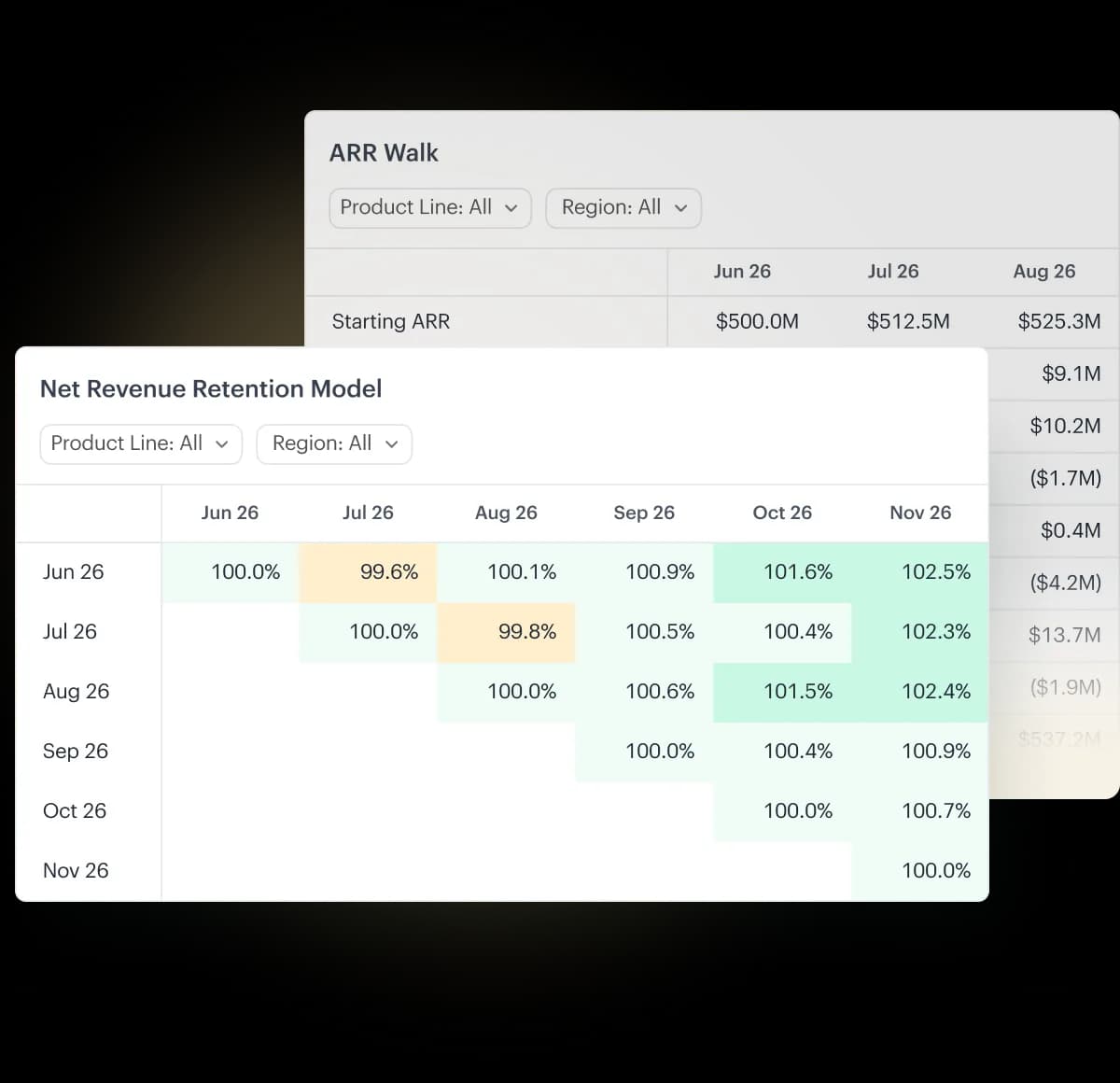















Spreadsheets can't keep up, and most planning
tools can't model revenue the way you do
- The revenue model is a large and complex spreadsheet, and the smallest change break it.
- Modeling revenue for multiple streams and custom drivers doesn't fit off-the-shelf templates.
- Pipeline, bookings, and actuals get pulled manually each week from CRM, ERP, and other sources.
- And every what-if means rebuilding the model, so finance becomes the bottleneck on decisions.
Drivetrain: flexible enough for any revenue model, yet simple enough to run yourself
[ 01 ]
Model revenue exactly how your
business works.
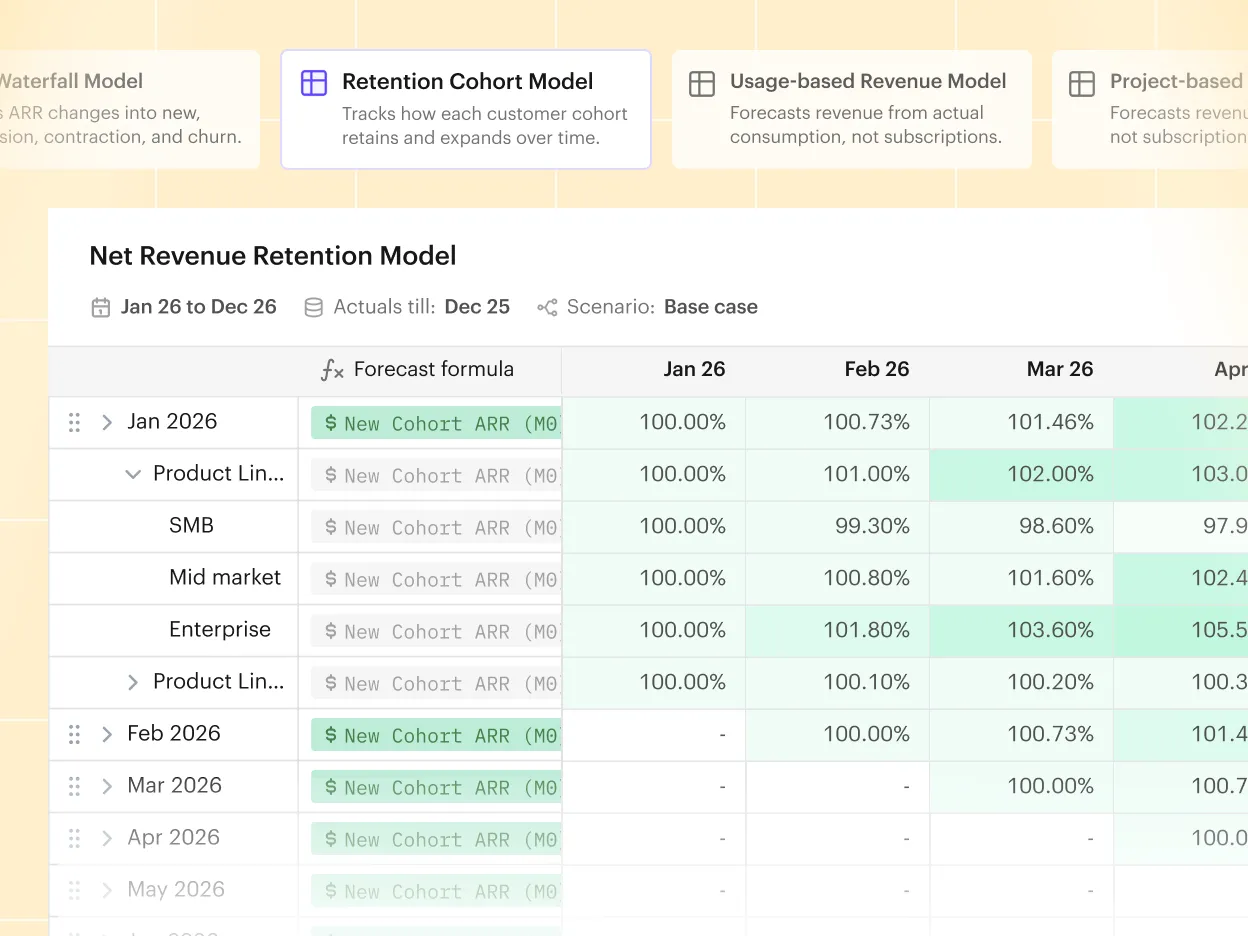
With a driver-based engine, model any revenue, subscription, usage, transactional, or project-based, from an ARR waterfall, PxQ, sales capacity, cohort, or anything else.
Model at any level of detail: by region, segment, AE, product line, or SKU, even an individual customer. Use AI to build, edit, and understand your models.
[ 02 ]
Build complex models without
the fragility.
Make your model as detailed as you need, and it won't slow down or break. No more waiting overnight just to insert a new row, or broken formulas when you change an assumption.
If you need to make edits, ask AI instead of rebuilding from scratch.
[ 03 ]
Bring in data from your systems
and team.
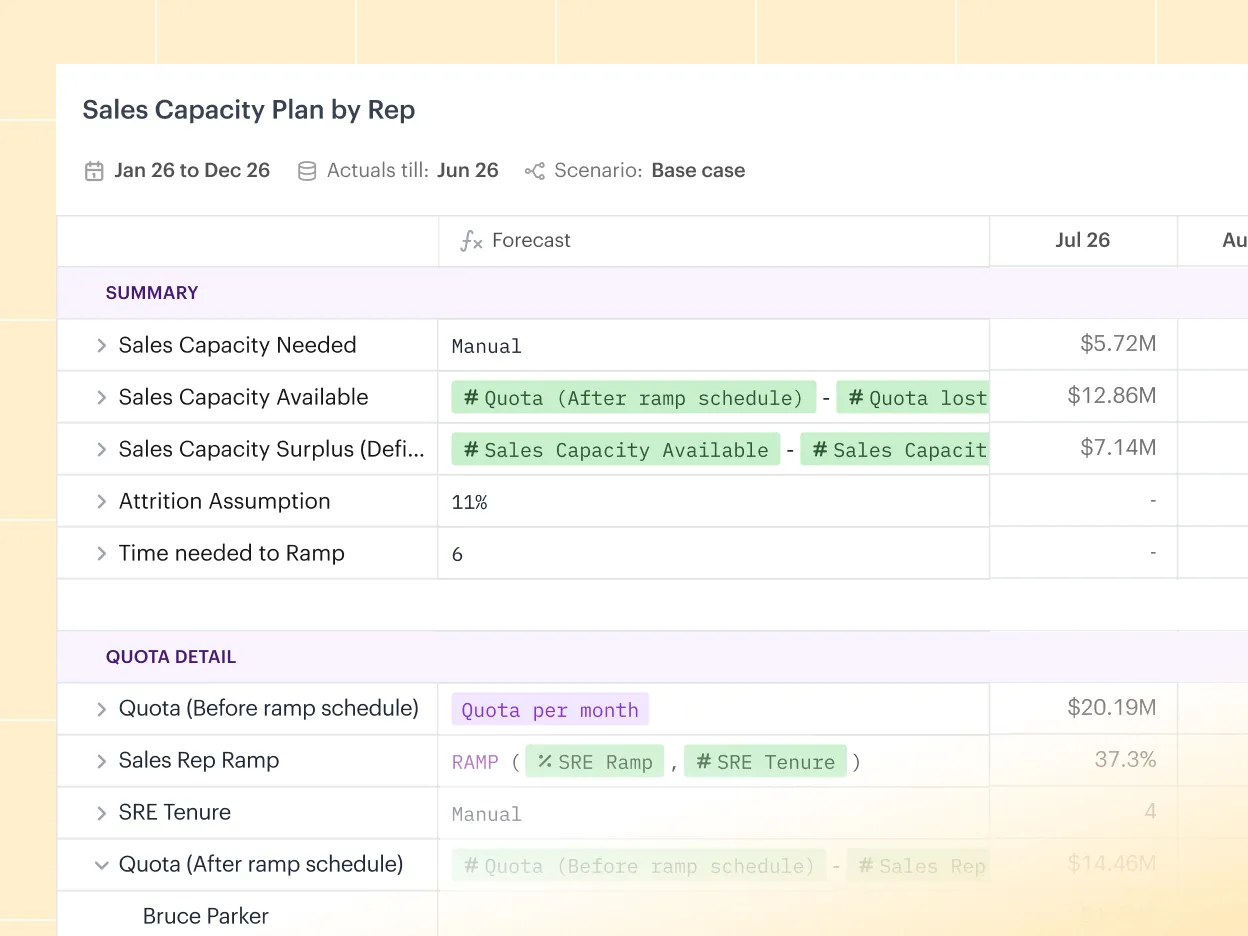
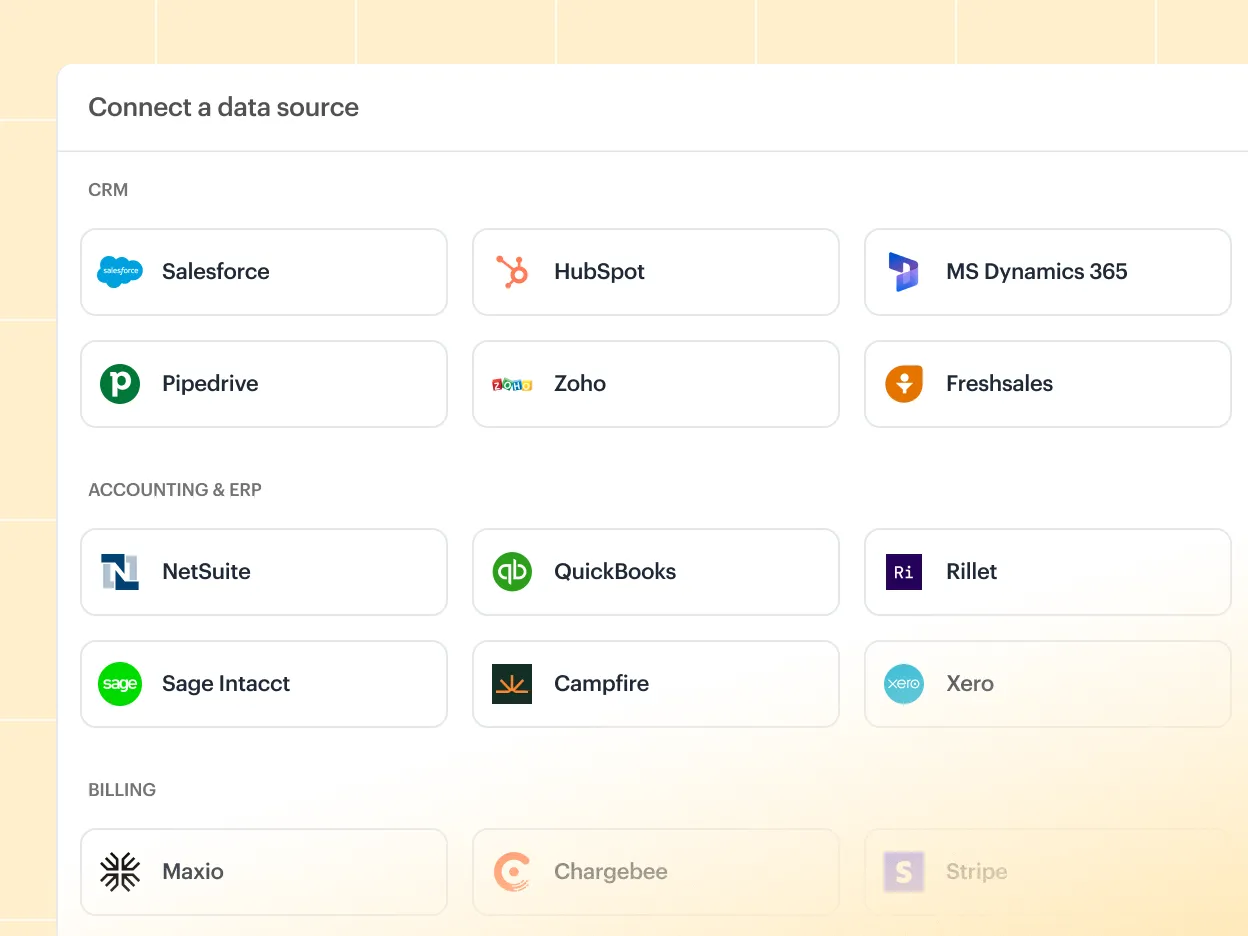
With 800+ connectors, actuals from CRM, billing, and other sources flow in on their own, so you're not updating numbers by hand every time you re-forecast.
Sales and revenue leaders can directly provide their inputs on pipeline and other assumptions through access-controlled views.
[ 04 ]
Run what-ifs in minutes.
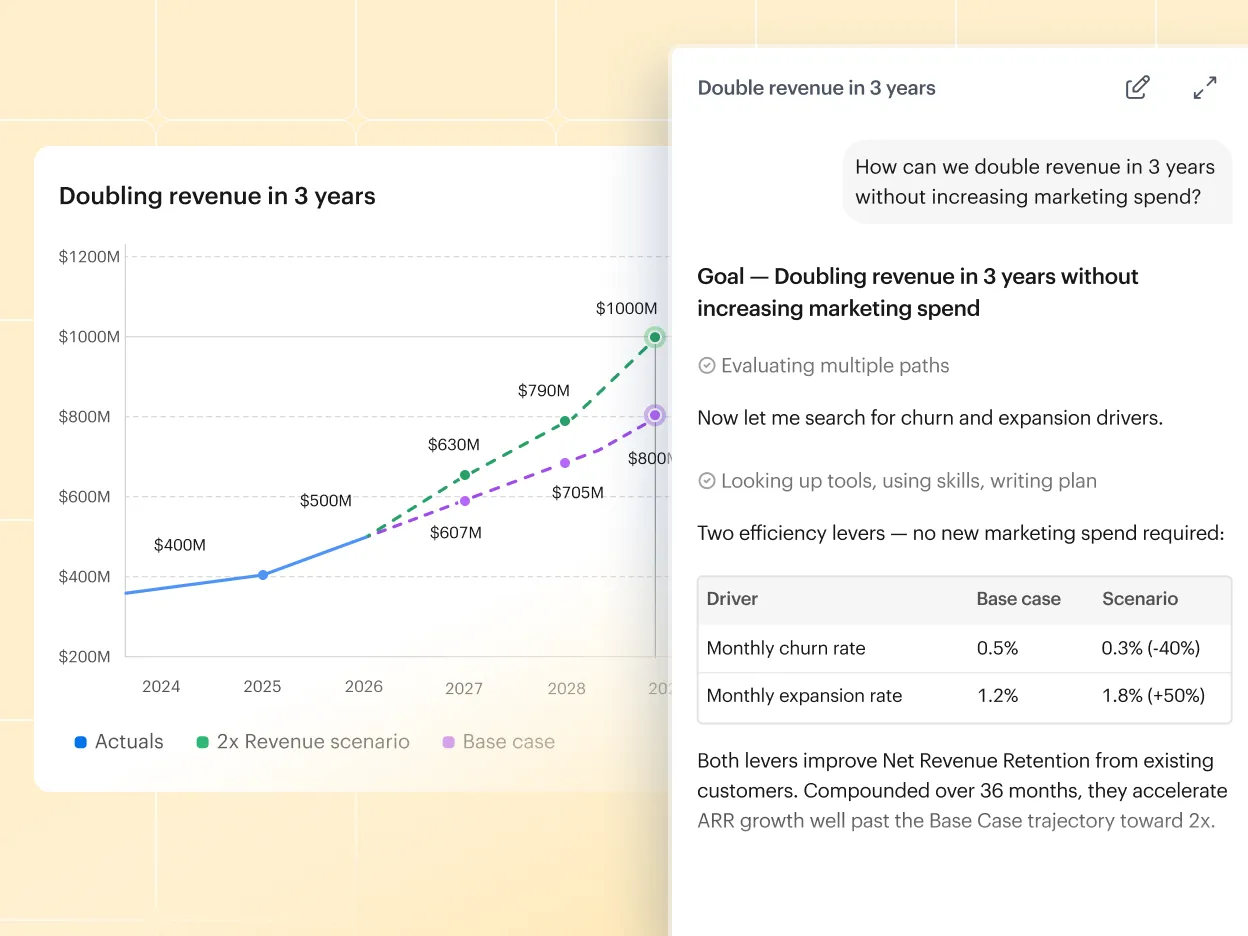
Build a scenario from a simple prompt, like "what happens if we raise prices by 15%?", and watch it flow straight through to your P&L and cash flow.
Or set a target, like "how can I double revenue without increasing marketing spend?", and let AI find the best path to it.


“The Drivetrain team co-built our models with us to perfectly translate our former Excel logic into Drivetrain. The platform itself is powerful and intuitive, offering great automation, clear visibility, and a strong connection with Salesforce and other systems.”
 Jean-Thomas CookVP Finance


See how revenue planning works on Drivetrain
Modern finance teams use Drivetrain to do more
Can I model revenue by product, segment, country, region, even down to a single customer?
Can I build a bottom-up pipeline forecast and a top-down target, and reconcile the two?
Can I bring in my existing Excel model, or do I have to rebuild it from scratch?
Can I flip a driver like attainment and see the impact on bookings and EBITDA, without rebuilding anything?
We run multiple entities. Can I use one revenue model for some companies and a different one for others?
How long until we're live, and will I need a consultant to set it up or to change it later?
Still planning revenue in spreadsheets?
Fewer manual updates, a forecast you can trust, and what-ifs in minutes.